


Have you ever looked at that ancient, dust-covered laptop sitting in the corner of your closet and wondered if it’s plotting a slow-motion takeover of your shelf space? We’ve all been there—it feels wrong to throw it in the trash, but it’s too “clunky” to actually use, so it sits there as a digital fossil.
But here is the kicker: that old machine is a literal goldmine containing actual gold, silver, and copper, alongside a decade’s worth of your digital soul. Laptop recycling isn’t just about being a “green” hero; it’s a tactical approach to data defense and resource recovery that turns e-waste into an environmental win without accidentally handing your identity over to a stranger.
Why Recycle an Old Laptop?
Deciding to pursue laptop recycling is about more than just clearing out a desk drawer; it is a vital step in protecting your identity and the planet. When you understand the profound impact of e-waste, it becomes clear that professional laptop recycling is the only responsible way to retire an obsolete device.
Preventing Devastating Environmental Contamination
If you choose to ignore laptop recycling and send your device to a standard landfill, the heavy metals inside—such as lead, mercury, and cadmium—eventually leak into the surrounding soil. Over time, these toxins seep into the groundwater, traveling for miles and poisoning local ecosystems and community water supplies. Engaging in laptop recycling acts as a critical barrier, ensuring these hazardous materials are captured and neutralized in a controlled industrial environment rather than becoming a permanent environmental threat.
Advancing the Global Circular Economy
Through the process of laptop recycling, high-value materials like gold, silver, copper, and palladium are meticulously harvested to be reused in the production of new technology. This “urban mining” is significantly more energy-efficient than traditional mining and drastically reduces the need for destructive new extraction projects in sensitive ecological zones. By prioritizing laptop recycling, you contribute to a sustainable, closed-loop system that preserves the Earth’s finite resources and lowers the carbon footprint of the entire tech industry.
The Hidden Value Under the Keyboard
Your old device is essentially a compact, high-tech treasure chest, containing a concentration of precious metals that far exceeds what can be found in natural geological deposits. Engaging in laptop recycling allows these rare materials to be recovered and reintroduced into the manufacturing cycle, effectively reducing the devastating environmental impact of traditional open-pit mining.
The Efficiency of Urban Mining
The process of “urban mining” through laptop recycling is remarkably more efficient than primary extraction, as mining one ton of old laptops can yield significantly more gold than several tons of raw earth ore. This specialized recovery focuses on harvesting high-conductivity gold and silver from circuit board connectors, while also reclaiming essential industrial metals like copper from cooling systems and aluminum from the device chassis. By choosing laptop recycling, you ensure that rare elements like palladium and cobalt—crucial for modern battery technology—are salvaged rather than wasted in a landfill, supporting a more sustainable and circular tech economy.
Facts About Laptop Recycling
In this section, we will be discussing the essential facts that you should know before committing to laptop recycling. Understanding the deep impact of your old device helps you appreciate why professional laptop recycling is a global necessity for both safety and sustainability.
1. Why Laptop Waste Consists of Concentrated Toxic Waste
While discarded electronics only occupy about 2% of the total physical volume in global landfills, it has been scientifically proven that this small fraction accounts for a staggering 70% of the toxic heavy metals found in our environment. When you neglect laptop recycling and toss a device into a standard bin, you are contributing to a massive concentration of environmental poisons that far outweighs the physical size of the machine. Keeping your surrounding environment clean requires a clear understanding of these harmful elements, making laptop recycling a vital responsibility for every tech user.
2. The Reality of Hazardous Materials in E-Waste
Every discarded component in an old computer—from the screen to the motherboard—is classified as hazardous waste because it contains a lethal cocktail of Cadmium, Polyvinyl Chloride, Mercury, Barium, Lead, and Lithium. Without the intervention of professional laptop recycling, these raw elements are often discarded carelessly, leading to the contamination of groundwater and soil which directly affects human health. It is essential to ensure these materials are handled through a certified laptop recycling process to prevent these neurotoxins from entering the food chain.
3. The Danger of Mismanaged Incinerators
When you discard a device without using a verified laptop recycling service, the components often end up in massive incinerators rather than being repurposed. These incinerators burn electronic parts, releasing enormous quantities of toxic smoke and ash into the atmosphere, which is a tragedy considering that these materials were meant to be recovered. By prioritizing laptop recycling, you ensure that your device is disassembled for parts rather than being burned in a way that generates further environmental waste.
4. Digital Security and Data Breaches
In our hyper-digitalized world, where almost 70% of global operations are online, laptop recycling is as much about data protection as it is about the environment. Many individuals unknowingly discard dysfunctional hard drives or memory cards in neighborhood dumping grounds, where they can easily fall into the hands of cybercriminals. Choosing a professional laptop recycling partner ensures that your personal data is physically destroyed or digitally wiped to NIST standards, preventing the catastrophic misuse of your private information.
Inflated Job Opportunities in the Green Sector
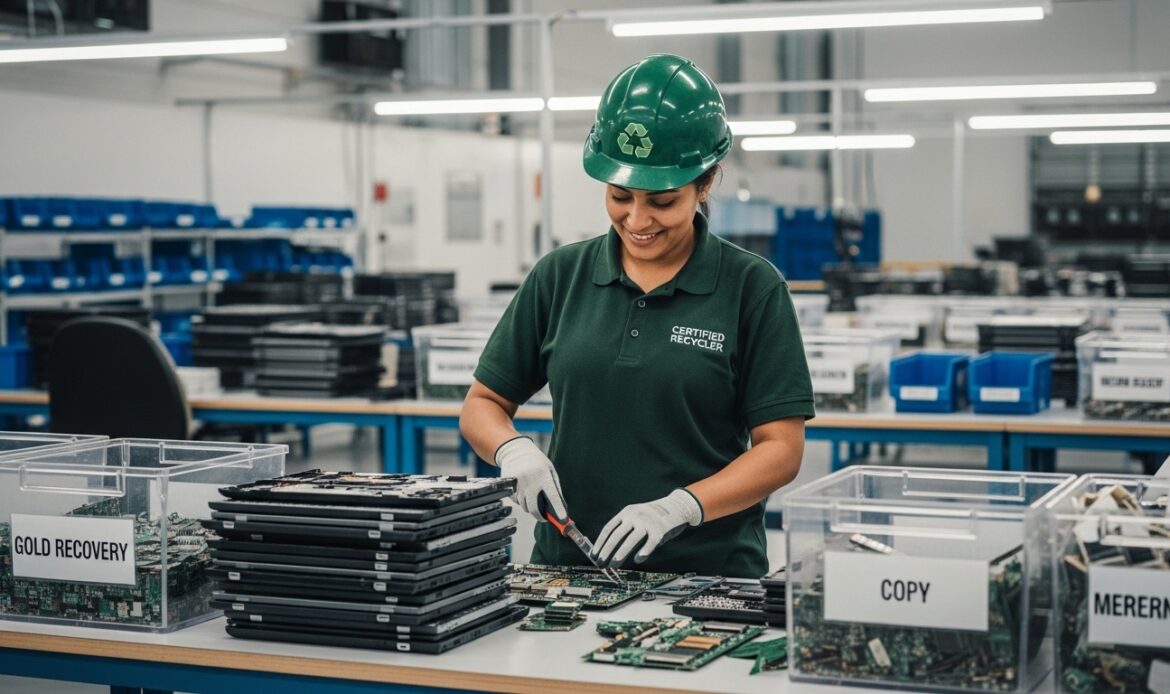
One of the most positive facts about laptop recycling is its ability to stimulate the global economy by creating “green-collar” jobs. Statistics show that for every 10,000 tons of electronics processed, laptop recycling industries create nearly 300 new jobs on average, which is significantly higher than the employment generated by simple landfill disposal. Supporting the laptop recycling sector doesn’t just save the planet; it provides a livelihood for thousands of technicians, logisticians, and engineers worldwide.
The High Reusability of Electronic Waste
Many consumers believe that a device beyond repair is completely useless, but manufacturers can almost always find a second life for components through laptop recycling. Even if the laptop as a whole is dead, the plastic casings, cooling fans, and hinges can be harvested to manufacture new products, which drastically saves landfill space. Through systematic laptop recycling, waste is transformed back into raw material, closing the loop on production and reducing the need for virgin resources.
Harvesting Precious Metals Through Recovery
A major incentive for laptop recycling is the extraction of valuable metals like silver, copper, gold, and palladium that are embedded in the circuitry. These metals are increasingly rare and expensive to mine, but they are found in high concentrations within old computers, making laptop recycling an essential part of the modern supply chain. By recovering these precious materials, we reduce the environmental degradation associated with traditional mining while lowering the cost of future electronic components.
The Valuation of Disassembled Components
Once the parts are disassembled during the laptop recycling process, many individual components are found to hold significant market valuation for other industries. From specialized glass to high-grade magnets, the materials recovered through laptop recycling are sold and traded globally to be used in everything from automotive manufacturing to aerospace engineering. This “virtual recycling” ensures that no part of your old tech goes to waste, maximizing the economic and ecological utility of the device.
Streamlined Corporate Laptop Recycling
For businesses, laptop recycling can be as simple and streamlined as recycling office paper when partnering with a Certified e-Steward. Corporate entities handle large volumes of sensitive data and hardware, and professional laptop recycling services offer bulk pickup and audited destruction reports to meet compliance standards. Implementing a formal laptop recycling policy at the corporate level is one of the most effective ways for a company to hit its sustainability goals while protecting its proprietary information.
How Manufacturers Encourage Responsible Disposal
Today, almost all major laptop manufacturers and retailers highly encourage laptop recycling by offering accessible take-back programs for their customers. These companies often accept devices regardless of their age, brand, or condition, providing a “no-questions-asked” path for laptop recycling to ensure their products don’t end up in a landfill. By taking advantage of these retailer-led laptop recycling initiatives, you are supporting a corporate culture of extended producer responsibility.
7 Vital Steps to Protect Your Privacy
Step 1: The Great Digital Decoupling
Before committing to laptop recycling, you must perform a comprehensive “digital exorcism” to ensure your life isn’t accidentally deleted along with the hardware. Think of your hard drive like a library where deleting a file only removes the index card; the actual data remains on the shelf until it is physically overwritten. To avoid the heartbreak of losing years of work, prioritize a dual-layered backup strategy by syncing your essential folders to a secure cloud provider and creating a physical clone on a high-speed external SSD. Always remember to check overlooked areas like your “Downloads” folder and export your browser bookmarks before verifying the entire backup on a separate device to confirm your transition is seamless.
Step 2: Securing Your Identity (The Wipe)
A simple “Factory Reset” is a good start, but for true laptop recycling safety, you need to go deeper. If you’re tech-savvy, use software that meets the NIST 800-88 standards. This ensures that even forensic-level recovery tools can’t find your data.
“Data is the new oil, but a leaked hard drive is the new toxic spill.”
Common Toxins Found in E-Waste
| Element | Found In | Potential Health Risk |
| Lead | Solder & Glass | Nervous system damage |
| Mercury | Backlit screens | Brain and kidney issues |
| Cadmium | Chip resistors | Lung and liver toxicity |
| BFRs | Plastic casings | Hormonal disruption |
Step 3: Finding a Certified Recycler
The integrity of your environmental impact depends entirely on choosing a reputable partner for laptop recycling, as not all facilities follow ethical disposal practices. To avoid contributing to global pollution, specifically look for providers holding R2v3 or e-Stewards certifications, which guarantee that your device won’t be illegally shipped to developing nations for hazardous open-air burning. These certified “pros” operate under a zero-landfill policy and provide a formal Certificate of Data Destruction, giving you documented peace of mind that your old tech is being handled with the highest industrial standards. Partnering with a certified recycler ensures that every component is tracked and treated with the respect the planet deserves.
Step 4: The Battery Dilemma
Lithium-ion batteries are the volatile “divas” of the laptop recycling world and require specific handling to prevent dangerous “thermal runaway” fires in transit. If these batteries are crushed or punctured in a standard garbage truck, they can spark intense chemical blazes that are notoriously difficult for emergency services to extinguish. Whenever possible, remove the battery if it is user-accessible and secure the metallic terminals with clear tape to prevent short-circuiting before handing it over to a technician. Proper battery management is a non-negotiable safety step that protects the workers and the infrastructure involved in the e-waste collection process.
Step 5: Should You Donate Instead?
If your device is less than five years old and still functional, you might consider refurbishing as a high-impact alternative to immediate laptop recycling. Many non-profits, local schools, and community centers are in desperate need of “slow” but working hardware to provide digital access to students and seniors who would otherwise be left behind. Programs like Digitunity or library maker spaces can breathe new life into your old machine, extending its utility and delaying the need for energy-intensive material recovery. Choosing to donate allows your technology to serve a social purpose while still eventually ending its journey in a responsible recycling facility.
Step 6: Trade-In Programs (Get Paid!)
You don’t always have to give your old tech away for free, as many major manufacturers offer lucrative trade-in incentives to encourage laptop recycling within their own supply chains. These “take-back” programs often reward you with gift cards or discounts on new hardware, as companies are increasingly eager to harvest high-value components for their own circular manufacturing goals. By participating in a manufacturer’s official program, you ensure the device stays within a closed-loop system where parts are either refurbished or recycled according to the brand’s specific sustainability commitments. It’s a win-win scenario that puts money back in your pocket while guaranteeing professional oversight of the device’s end-of-life.
Step 7: The Final Drop-Off
The final stage of laptop recycling is the most satisfying: the physical hand-off that clears your space and completes the sustainability cycle. Many big-box tech retailers now offer convenient kiosks right at their front doors, making the disposal process as simple as dropping a letter in a mailbox. Once you have backed up your files, wiped the drive, and verified the recycler’s credentials, you can confidently walk away knowing you’ve successfully diverted hazardous materials from the landfill. This simple act marks the completion of your responsibility as a conscious consumer, turning an obsolete tool into a resource for the future.
Laptop Recycling for Small Businesses and Startups
For entrepreneurs and small business owners, managing a fleet of old hardware presents a unique set of logistical and security challenges. Establishing a formal protocol for laptop recycling is not just an environmental win; it is a critical component of professional risk management.
Meeting Compliance and Data Privacy Regulations
Small businesses are often subject to strict data privacy laws that mandate the secure disposal of any hardware containing client or financial information. Implementing a consistent laptop recycling policy ensures that your business remains compliant with local regulations while protecting your company’s intellectual property from potential breaches. Professional laptop recycling services provide the necessary paper trail and destruction certificates required to satisfy auditors and protect your brand’s reputation.
The Global Crisis of Unmanaged E-Waste
While individual action is vital, the scale of the electronic waste problem is a global phenomenon that requires urgent collective attention. Understanding the macro-impact of laptop recycling helps illustrate why your single device is part of a much larger environmental movement.
The Rapid Growth of the Digital Waste Stream
Electronic waste is currently the fastest-growing solid waste stream in the world, with millions of tons of devices being discarded annually as consumer upgrade cycles become shorter. Without a massive increase in the rate of laptop recycling, our global infrastructure will struggle to manage the sheer volume of toxic materials entering landfills every day. By participating in laptop recycling, you are helping to slow this “tsunami” of waste and encouraging a shift toward more sustainable consumption patterns.
Sustainable Design: The Future of Laptop Recycling
The tech industry is slowly evolving, with many manufacturers now designing hardware that is actually meant to be taken apart. This shift in engineering is making the future of laptop recycling more efficient and less energy-intensive than ever before.
Designing for Modular Disassembly
Forward-thinking tech companies are beginning to move away from glued-in batteries and soldered components, opting instead for modular designs that simplify the laptop recycling process. When a device is “designed for recycling,” it allows automated systems to recover materials with much higher purity, ensuring that secondary resources can go straight back into new high-end electronics. This evolution in manufacturing ensures that laptop recycling remains a viable and profitable pillar of the global tech economy for decades to come.
Laptop Recycling for Small Businesses and Startups

For entrepreneurs and small business owners, managing a fleet of old hardware presents a unique set of logistical and security challenges. Establishing a formal protocol for laptop recycling is not just an environmental win; it is a critical component of professional risk management.
Meeting Compliance and Data Privacy Regulations
Small businesses are often subject to strict data privacy laws that mandate the secure disposal of any hardware containing client or financial information. Implementing a consistent laptop recycling policy ensures that your business remains compliant with local regulations while protecting your company’s intellectual property from potential breaches. Professional laptop recycling services provide the necessary paper trail and destruction certificates required to satisfy auditors and protect your brand’s reputation.
Community-Led Laptop Recycling Initiatives
You don’t have to wait for a manufacturer to take action; many of the most successful sustainability stories start at the local level. Community-led laptop recycling drives are becoming a popular way for neighborhoods to pool resources and tackle e-waste together.
The Power of Local E-Waste Collection Events
Many municipalities and non-profit organizations host quarterly “drop-off days” where residents can bring their old tech for professional laptop recycling at no cost. these events often partner with certified e-stewards to ensure that every collected device is handled ethically and stays out of the local trash system. participating in or organizing a local laptop recycling event is a fantastic way to raise awareness and ensure that your entire community is disposing of hazardous materials correctly.
The True Cost of New vs. Recycled Materials
The energy required to extract raw minerals from the earth is astronomically higher than the energy needed to recover them from existing devices. Laptop recycling is one of the most effective ways to lower the overall energy consumption of the electronics industry.
Energy Savings in the Resource Recovery Loop
Recovering aluminum, copper, and gold through laptop recycling uses up to 90% less energy than mining and refining the same metals from virgin ore. This massive reduction in energy demand directly translates to lower greenhouse gas emissions and a smaller carbon footprint for every new device manufactured using recycled content. Choosing laptop recycling is effectively an act of energy conservation, proving that the most efficient “mine” in the world is the one already sitting in our junk drawers.
Sustainable Design: The Future of Laptop Recycling
The tech industry is slowly evolving, with many manufacturers now designing hardware that is actually meant to be taken apart. This shift in engineering is making the future of laptop recycling more efficient and less energy-intensive than ever before.
Designing for Modular Disassembly
Forward-thinking tech companies are beginning to move away from glued-in batteries and soldered components, opting instead for modular designs that simplify the laptop recycling process. When a device is “designed for recycling,” it allows automated systems to recover materials with much higher purity, ensuring that secondary resources can go straight back into new high-end electronics. This evolution in manufacturing ensures that laptop recycling remains a viable and profitable pillar of the global tech economy for decades to come.
Conclusion
Laptop recycling is far more than a simple checkbox on a spring-cleaning list; it is a powerful act of digital hygiene and global environmental stewardship. By taking the time to wipe your sensitive data and locate a certified facility, you are actively preventing toxic leaks, reclaiming rare earth minerals, and ensuring your private life remains exactly that—private.
The transition from a “linear” take-make-waste model to a circular economy starts with the device currently sitting in your closet. Choosing laptop recycling ensures that the “sleeping giants” of our digital age are given an honorable and productive retirement rather than becoming a multi-generational environmental burden. So, go ahead—liberate your storage space, protect your identity, and give your old technology a second life through the responsible path of laptop recycling.
Your old tech doesn’t belong in the trash. Learn more about e-waste recycling to protect the environment and secure your personal data.
Frequently Asked Questions
How do I permanently wipe my data before recycling?
Simply deleting your files or emptying the recycle bin isn’t enough, as data recovery software can easily retrieve that information from the hard drive’s magnetic plates. You should use a dedicated data destruction tool that overwrites your entire drive with random binary patterns multiple times to ensure your privacy is unrecoverable. For those who aren’t tech-savvy, many certified recycling centers offer physical hard drive shredding, which literally grinds the storage component into tiny, unreadable metallic confetti.
Can I recycle a laptop if the battery is swollen or damaged?
A swollen “pillowing” battery is a significant fire hazard and should never be placed in a standard recycling bin or shipped through regular mail services. You must handle the device with extreme care, placing it in a non-flammable container like a metal bucket filled with sand while you transport it to a specialized hazardous waste facility. Most dedicated e-waste drop-off points have specific protocols for “damaged, defective, or recalled” lithium batteries to prevent dangerous thermal runaway events during the processing phase.
Is there a cost associated with professional laptop recycling?
For individual consumers, many major retailers and manufacturers offer free “take-back” programs where you can drop off your old device at no charge regardless of the brand or condition. However, if you require a formal “Certificate of Data Destruction” for legal or business compliance, some specialized recycling firms may charge a small administrative fee for the documented service. It is always a smart move to check the recycler’s website beforehand, as some local government-sponsored events provide free recycling for residents while charging for corporate bulk drops.
What actually happens to my laptop after I drop it off?
Once collected, your laptop is typically sent to a primary processing facility where it is manually disassembled to separate high-value components like RAM, CPUs, and graphics cards. The remaining chassis and circuit boards are then shredded and sorted using powerful magnets and laser sensors to recover precious metals like gold, copper, and palladium for reuse in new electronics. Any non-recyclable toxic elements are carefully captured and disposed of in specialized hazardous waste cells to ensure they never leak into the local environment or water supply.