

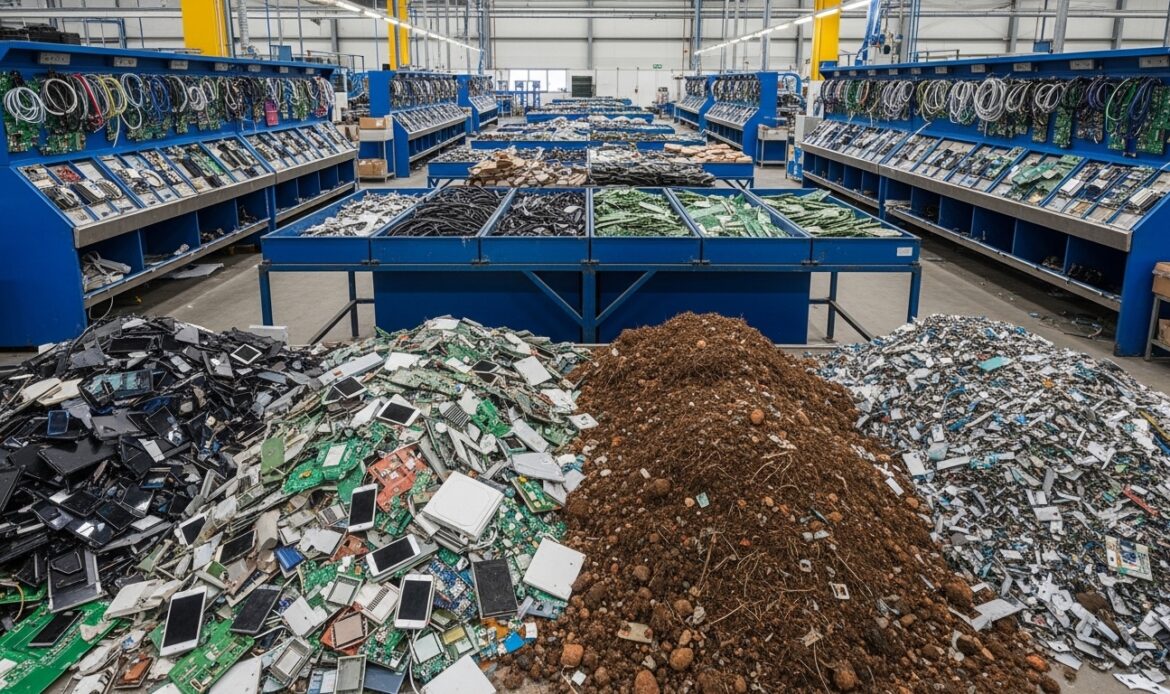
Hold on a second. Before you put your broken cell phone in the kitchen trash can, you may want to think about this. Do you know where old electronics go when they die? No, it’s not some kind of magical technology land where old flip phones and heavy monitors play in a field of green grass. It is usually a way worse situation. E waste recycling is not just something nice to do on the weekends anymore, but it is now a worldwide necessity and is right in the middle of saving our environment and using our great economic brain.
In this article, we will explore the world’s fastest growing waste stream, E Waste Recycling. You will find out why your old laptop is actually a gold mine (yes, literally!) and what to do to keep your personal information safe from data thieves. We will also explain why the circular economy is not just a trendy term, it is the only way we can move forward.
Table of Contents
What Exactly Is E Waste E Waste Recycling and Why Should You Care?
E-waste, or electronic waste, is defined as any electronic device (such as an item that has a battery, plug, or circuitry) that you no longer want to keep because it’s old and unusable to you. Think about the junk drawer in your house. You can picture it—it’s the one with all of the USB cords that have been twisted into knots, it contains an old iPod (which you would probably call “vintage” now), and it has about three remotes for TVs you currently own. E Waste Recycling is one of the fastest-growing waste streams globally; it is currently growing at a rate three times greater than any other type of municipal waste.
The classification of E Waste Recycling can include anything from a high-quality laptop or smartphone down to large appliances such as your refrigerator or microwave. As technology evolves faster and faster due to short product life cycles and planned obsolescence, the volume of electronic products being disposed of continues to rise rapidly; hence, they present a serious disposal issue for municipalities.
The Trojan Horse in Your Landfill
The issue with these devices is that they function as Trojan horses. They appear sleek and modern on the surface, but are contained inside a very hazardous environment comprised of heavy metals and toxic materials. When you dispose of them in the traditional garbage stream, they are directed into landfills, where they will eventually start to “leak” as their casings degrade over time.
Picture a used battery as a small, leaking chemical processing plant in your backyard. It is not just a piece of plastic, but a concentrated source of lead, lithium, and sulfuric acid. These chemicals are not stationary; they will penetrate the earth and eventually reach the water table, polluting the water sources that we all depend on to live.
Wasted Resources and Economic Loss
The tragedy of lost opportunity goes hand in hand with the danger presented by toxic electronic waste. Each time a circuit board is discarded to a landfill, we lose rare earth metals that are expensive and carbon-intensive to extract from the earth. By failing to recycle electronic waste, we’re effectively burying a wealth of precious metals—including gold, silver, and palladium—and simultaneously poisoning our groundwater.
The double-edged sword scenario of potential harm to both our economy and our health is made worse by the enormous energy consumption and high levels of CO2 emissions associated with developing new minerals (lithium, copper, etc.). In contrast, recovering these same materials from discarded electronics consumes only a fraction of the energy and helps maintain the circular economy.
Why Your Personal Action Matters
Why is this your concern? Because there’s no such thing as “away” when we “throw” something. All those metals — mercury, cadmium, arsenic — are also finding their way into the food chain and the air we breathe, either because we burn them or dump them somewhere. Being concerned about e-waste means understanding that our convenience in the digital world should not come at a cost of leaving a toxic legacy.
At the moment, we have accelerated our consumption of devices, which has far exceeded what the planet can replenish or even absorb. By being a responsible E Waste Recycling consumer, you are taking action to separate economic development from environmental destruction. The first step is recycling one device; the end result is a healthier planet for all of us.
The Hidden Gold Mine in Your Trash Can
Did you know that the amount of gold that comes from a tonne of iPhones is more than from a tonne of mined gold? It seems unbelievable, but it is true. There is a lot of precious metals in the things we use every day for instance:
- GOLD: This is in the connectors and pin’s of the circuit boards.
- SILVER: Is used in the switches and in the higher quality solder.
- COPPER: Is the veins of any electronic device and carries the power.
- PALLADIUM: Is needed for multilayer ceramic capacitors.
- PLATINUM: Is in various components of internal hard drives.
So when we don’t do the process of E Waste Recycling, we are not only harming mother Earth, but we are also throwing away money. To mine all of these precious metals from the Earth requires an enormous amount of energy and is detrimental to the environment. By E Waste Recycling, we “mine in the city” or do “urban mining” which is far more efficient than mining on earth and keeps all of the precious metals in the “recycling stream.”
The Digital Ghost: Data Security Risks
Do you believe that simply deleting your files is sufficient? If so, think again! Without professional data destruction, discarding a computer is like leaving your house keys on the front door open with a sign stating “Anyone can come in!” Identity thieves love e-waste. They can easily recover your social security number, bank information and personal photographs from an abandoned hard drive.
Real e waste recycling includes much more than just melting plastic. It also includes what we call data sanitation. Data sanitation involves two methods: (1) physically shredding and destroying the hard drive into small pieces (i.e., creating shredding “confetti”) or (2) using industrial quality software to completely wipe the hard drive clean of any data so that even someone using forensic analysis would never have the ability to find any evidence of previous data.
How the Pros Do It: The E Waste Recycling Process
What happens after you drop your laptop at a collection point? It doesn’t just get tossed into a big blender (well, not immediately). The process is actually quite sophisticated.
| Stage | Process Name | Description |
| Stage 1 | Collection & Transport | Gathering waste from drop-off points and bringing it to a facility. |
| Stage 2 | Sorting & Categorization | Separating items by type (e.g., CRT monitors vs. LED screens). |
| Stage 3 | De-manufacturing | Manually removing hazardous items like batteries and ink cartridges. |
| Stage 4 | Mechanical Shredding | Breaking the remaining components into tiny pieces for easier sorting. |
| Stage 5 | Separation | Using magnets, lasers, and water to separate plastic, glass, and metal. |
The Legend of the Circular Economy– E Waste Recycling
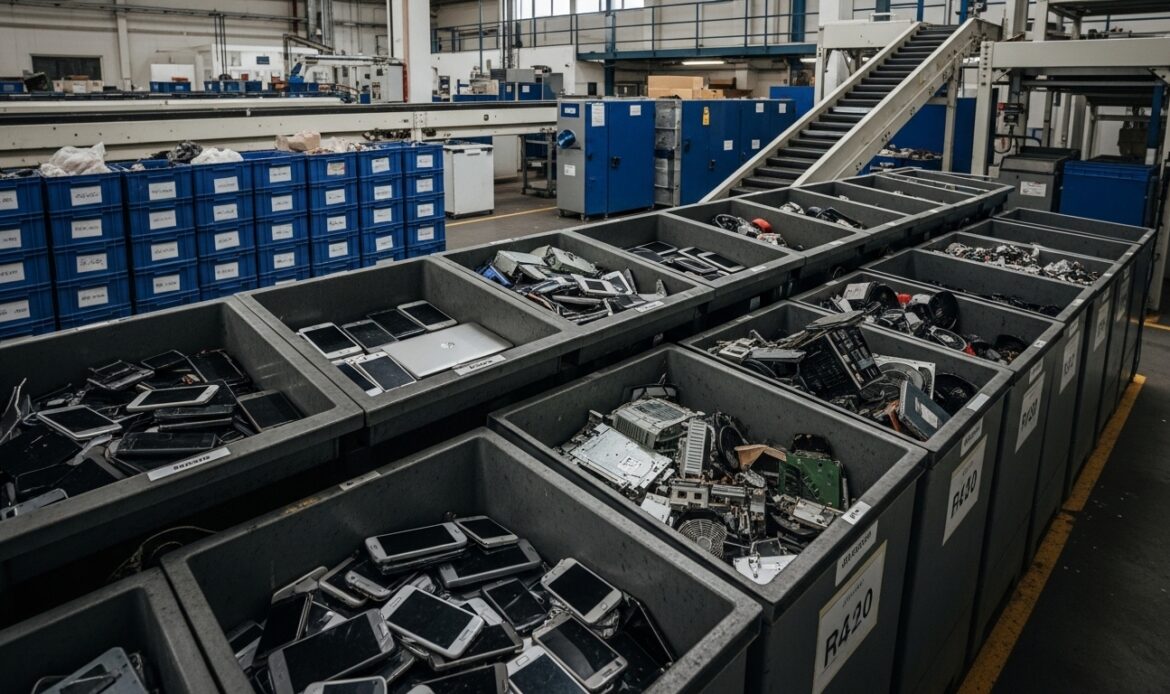
The world has been operating in a linear fashion: Take, Make, Discard – for too long. This method of manufacture/economy is taking us down a dead-end road and leading to the destruction of resources and the over-filling of landfills. With the linear economy, the earth is stripped of its resources and raw materials; products made from these resources and raw materials are manufactured with limited lives and then thrown away at the end of their lives as if they no longer hold any value. The e waste recycling industry will become the facilitator of that closed loop by making the linear economy a closed-loop circular economy.
Closing the Loop on Raw Materials
By using the circular economies model, products that are at the end of their life cycle are repurposed at the start of a new life cycle. They have a regenerative way of being created, where by removing the concept and body of waste is possible from all equations.
For example, if you have an old phone with a broken screen, the glass and the rare earth metals that are found inside the glass belong back in circulation and should not just be thrown away into a landfill; instead they should be taken out of the phone; recycled; reclaimed; reprocessed; and then used to create either new digital devices such as computers or for manufacturing products for the medical field. The continuous use of these materials reduces the amount of virgin mining that is used through the E Waste Recycling.
Turning Printer Casings into Car Parts
This system offers such a high degree of flexibility based on the recovered materials. The previous printer casing (which is made from a high quality plastic) does not simply disappear; it can be cut up and melted into a modern dashboard for a new electric car or as parts for high-performance appliances. This is not merely something that is predicted, but rather it is ongoing throughout the world at many E Waste Recycling centres. One saves enormous amounts of energy in producing materials needed to create a product, when considering an old gadget as an already processed group of useful resources, instead of being considered “junk.”
Designing for the Future of E-Waste Recycling
An efficient circular economy helps to change how we manufacture products to begin with. More and more manufacturers are designing electronics so that they are easier to break apart by using modular pieces of equipment so that the parts can be easily replaced or upgraded. This type of thinking leads to a very smooth and efficient process when it comes time for harvesting electronics at the e-waste recycling facility because each active electronic device represents only 1 configuration of 1 of countless combinations of potentially remanufactured products using existing materials.
The Power of Resource Localization
Establishing E waste recycling as an integral part of our economy will allow us to develop a localized supply chain. Cities will be able to tap into their own waste stream to produce the raw materials necessary for manufacturing rather than buying them from unstable global markets. This will generate employment, minimize price volatility, and lower greenhouse gas emissions from overseas transportation by developing a local supply chain. Overall, transitioning to a circular economy means changing how we think about things. Instead of viewing broken devices as failures, we can consider them to be resources that have been misplaced and are simply waiting for their next use.
5 Critical Strategies for Responsible Business E Waste Recycling
Businesses have an environmental impact that far exceeds that of an average individual or family. When a company decides to upgrade its technology or IT equipment, rather than simply disposing of a single laptop, they will normally dispose of hundreds of computers, server hardware, and other add-on components.
All of these discarded components and IT assets have a significant negative impact on the environment if not managed properly; therefore, it is critical for organizations to have a comprehensive system in place for the decommissioning and recycling of these electronic assets through a structured E Waste Recycling programme in order to comply with applicable laws as well as to avoid costly fines, data loss and poor public image due to improper disposal.
1. Conduct a Comprehensive Inventory Audit
The first step in preparing for E Waste Recycling is to perform an extensive inventory and asset audit of all IT assets previously owned and currently owned by the organization. By performing a thorough inventory of IT assets and identifying each asset by recording the serial number and device type in detail, you will create an accurate record for future reference.
In addition, your audit will provide you with a complete listing of all decommissioned and currently owned IT assets; this is extremely important as it provides continuity of reporting for each asset throughout its entire lifecycle, e.g., from the office desk to disposal at the smelting plant. Having a complete and accurate database of all assets will help prevent any “ghost” assets from continuing to exist under your company’s name.
2. Rigorously Verify Recycler Certifications
Not all E Waste Recycling centres are alike; some will ship your junk to an overseas location and burn it in open pits. To protect your company from this risk, you should only partner with recyclers that hold a reputed certification from an industry standard, such as R2 (Responsible Recycling) or e-Stewards. This certification shows that the recycling facility has complied with strict environmental, health, and safety standards. Choosing a certified recycler will allow you to feel confident that your company is not contributing to global pollution.
3. Prioritize Certified Data Destruction
As a company, discarded hard drives represent a potentially significant liability. Therefore, it is very important that your partner recycler offers industrial grade data sanitization or physical shredding of your hard drives. Simply “wiping” your hard drive is usually not adequate for high level corporate data. Always request that you receive a Certificate of Destruction, for every storage device you recycle. This document serves as proof that the data has been permanently destroyed, and provides you with a legal document in the event of a future data audit or privacy investigation.
4. Explore Donation for Recent Tech
The most effective way to E Waste Recycling is “to re-use e-waste”. If your tech equipment is less than 3 years old, it is likely still good. Consider donating your gently used laptops or tablets to a variety of schools, charities, and community locations. Many e waste recycling professionals have a refurbishment service where they can refurbish and prepare your old equipment to be reused. Not only does this keep hardware items out of the landfill for a longer period of time, but it also provides your business with social responsibility points.
5. Demand Detailed Environmental Reports
A qualified e waste recycling partner will not simply pick up your hardware and leave; they will provide you with metrics to support their proper recycling. Be sure to ask for your recycler to deliver you with detailed downstream reports, so you may see how much glass, plastic, and precious metals have been recovered through your electronics. These metrics are invaluable for your yearly sustainability report, and they can help demonstrate to your stakeholders how e waste recycling is producing positive changes within your corporate carbon footprint. Transparency is the sign of a truly green business partner.
The Dark Side: Environmental and Health Impacts
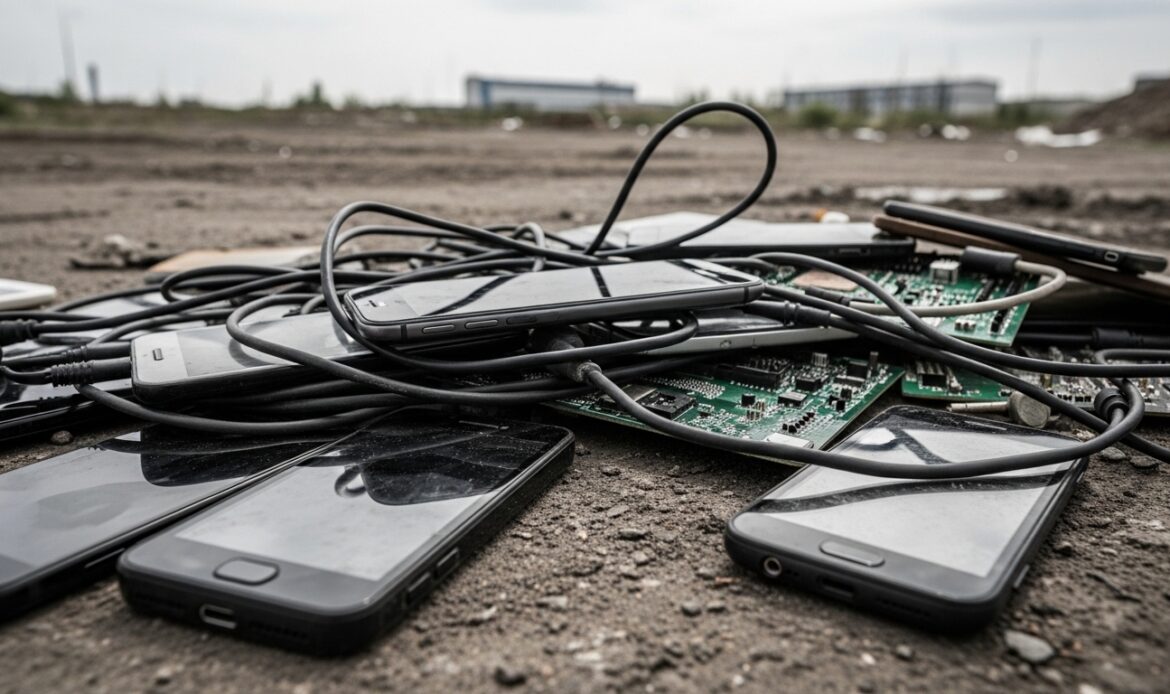
If electronic waste is like goldmines, we can think about them being the most toxic and deadly places to be around. By burning or smashing electronic items, there is little regulation on how these items are collected and disposed will emit toxins into the air and ground. Electronic waste will continue to move around in the environment and create long-term threats.
The Silent Threat of Lead Poisoning
Most people will associate lead with either old CRT televisions or to the solder on the circuitry of electronics. When we improperly do the process of E Waste Recycling, the dust from lead can be inhaled or get into the soil. When lead enters your body, it can have devastating impacts on your nervous system, and since the brain of a child is still developing, exposure to lead can lead to permanent damage to the brain with significant delays in IQ, behavioral issues, and learning disabilities.
Mercury: The Traveling Toxin
Mercury is commonly used in lighting components, such as the backlights of flat-screen monitors and laptop displays. If these components are smashed during haphazard e waste recycling, mercury vapor is released into the air or settles into water systems. Once in the water, it transforms into methylmercury, which bioaccumulates in fish. This means that a broken screen in one part of the world can eventually end up on a dinner plate thousands of miles away, causing severe nervous system disorders.
Cadmium and Carcinogenic Risks
Found in chip resistors, infrared detectors, and older types of rechargeable batteries, cadmium is a heavy metal that the body has a very hard time getting rid of. During low-tech e waste recycling operations, workers may inhale cadmium dust, which is a known carcinogen. Over time, exposure targets the lungs and kidneys, leading to chronic failure and bone fragility. Without formal recycling protocols, this metal persists in the environment for decades.
Brominated Flame Retardants (BFRs) and Hormones
BFRs are used for treating plastics to prevent flammability-related risks; however, once the treatment is melted down for “backyard” e-waste recycling (recuperation of metal), toxic gases are released into the atmosphere as gases formed while burning the plastic from the electronics. This toxic gas can be classified as a hormone disruptor. As a hormone disruptor, this hormone is capable of mimicking or interfering with natural functions of our endocrine (hormone) system. It has negative effects on thyroid function, reproductive function and also fetal development complications.
Beryllium: The Motherboard Menace
Beryllium is frequently alloyed with copper to create improved conductivity of motherboards/PCB connectors. Once integrated into motherboards, though, beryllium will not cause any harm. The dangerous effects of beryllium will occur during the shredding portion of e waste recycling (prior to being shredded). If no moisture is present, small particles of beryllium dust may be generated during this shredding process, and exposure to beryllium dust (even at relatively low levels) is capable of causing chronic beryllium disease (CBD). CBD will cause scarring of lung tissue, thereby resulting in potential death.
A Global Health Crisis Without Borders
These aren’t just issues occurring elsewhere. Environmental toxins have a unique method of moving through the air and water systems around the world. When an individual wastes resources improperly at one part of the globe, they influence the health of individuals at the opposite side of the globe through toxic trade and migration of pollutants. By recycling electronics correctly, we can not only ensure the locals have a clean place to live but will provide the benefits of keeping these five “nightmare” toxins out of our global ecosystem.
The Consumer’s Dilemma: Planned Obsolescence
When you realize your new phone is sluggish as soon as they release a new version, you are experiencing planned obsolescence. Planned obsolescence is a deliberate marketing strategy that manufactures limit the lifespan of products to create ongoing need to purchase replacements. It is the exact opposite of sustainability and one of the driving factors for E Waste Recycling. Manufacturers purposely create barriers to longevity by using non-removable batteries or programming updates into devices that are too large for previous generations to support, directly increasing dependence on E Waste Recycling systems.
The Engine of Throwaway Culture
Businesses need people to keep on buying to be able to continue to expand profit margins, but the Earth can’t keep pace with this linear “Take-Make-Waste” approach. The concept of planned obsolescence takes three primary forms:
- Technical – designed to be fragile yet expensive to repair, such as the incorporation of glass backs and glued-in batteries, leading consumers straight toward E Waste Recycling.
- Functional – updates of software that make older gadgets run slowly or no longer compatible with modern applications.
- Psychological – market tactics that make good working equipment seem “outdated” or “unfashionable”.
The rapid replacement of gadgets has an enormous impact on the environment; a manufacturer produces 80% of a device’s total carbon footprint before the product reaches its perch on the consumer shelf.
The Rise of the Right to Repair
The global “Right to Repair” movement has emerged as a result of the systemic problem. Individuals desire the legal ability to obtain parts, tools and manuals to repair their devices on their own instead of needing to upgrade their device early. The Right to Repair movement supports E Waste Recycling because it assists in keeping electronic devices out of the waste stream for as long as possible. Many jurisdictions have begun passing laws requiring manufacturers to provide consumers with repair assistance for 7 years or more, thus returning power to the consumer.
Think Before You Bin It
Before going to an E Waste Recycling facility, ask, “can this item be repaired?” Many times, an electronic item you may think is broken could have one of two repairs performed for under $30 to operate another two to three years. By choosing to have your device repaired rather than replaced not only is it keeping money in your pocket – it is reducing demand for the mining of virgin materials while also slowing the growth of one of the fastest growing waste streams (E Waste Recycling).
Conclusion on E Waste Recycling: The Future is in Your Junk Drawer
To conclude, E Waste Recycling goes beyond chemistry, industrial shredders and complicated logistics; it requires a dramatic change in our thinking from a throwaway society to one that treats the things we consume with respect. Not only do we need to respect the rare earth minerals which took millions of years to develop deep in the earth but we also need to respect the future generations who will inherit the land, water, and air to which we have given birth. Each smartphone we prevent from ending up in a landfill is another small step towards preserving the environment and ensuring sustainable resources.
Explore another insightful article to deepen your understanding for E Waste Recycling.
Frequently Asked Questions
What happens to the hazardous chemicals inside my electronics when they are recycled?
During professional E waste recycling, toxic components like lead-filled glass and mercury lamps are carefully extracted by hand before any mechanical shredding begins. These hazardous materials are sent to specialized facilities that neutralize the chemicals or stabilize them for secure, long-term storage. This prevent heavy metals from leaching into the soil or being released into the atmosphere as toxic vapor, which often happens in unregulated landfills.
Is it safe to donate my old computer without wiping the hard drive?
Donating a computer without a professional data wipe is extremely risky because even “deleted” files can be recovered by simple software. To stay safe, you should use a disk-overwriting tool that meets industry standards to ensure every bit of personal information is permanently erased. If the device is no longer functional, a certified E waste recycling center will physically shred the drive, turning your private data into unreadable metal confetti.
How can I tell if a recycling center is actually environmentally friendly?
The most reliable way to verify a recycler’s ethics is to look for “R2” (Responsible Recycling) or “e-Stewards” certifications on their website or facility. These third-party standards guarantee that the company does not export toxic waste to developing nations and follows strict safety protocols for their workers. A transparent E waste recycling partner will also be happy to provide documentation showing the final destination of the materials they recover from your gadgets.
Can I put old batteries and cables in my curbside recycling bin?
Standard curbside bins are designed for traditional recyclables, and putting e-waste in them can actually cause dangerous fires in garbage trucks or sorting centers. Cables can get tangled in machinery, causing expensive breakdowns, while lithium batteries can explode under the pressure of a trash compactor. Always take these items to a dedicated E waste recycling drop-off point or a retail store that offers a specific take-back program.