

We experience constant contact with electronic devices throughout our environment. People use technology in their everyday lives through their smartphones laptops televisions and tablets. When these devices stop functioning or reach their end of life what should users do about them? Most people simply throw them away adding to the growing mountain of electronic waste. The advantages of recycling e-waste need to be understood because they provide important benefits. The advantages of recycling e waste go far beyond simple disposal. The process of recycling e waste becomes beneficial when we understand its advantages because it enables us to convert outdated electronics into valuable resources instead of disposing them in landfills.
People can transform their methods of handling old electronics when they understand how e waste recycling creates benefits. Recycling prevents devices from contaminating landfills because it enables their reuse. The advantages of recycling e waste include protecting the environment, conserving valuable materials, and reducing pollution. The advantages of recycling e waste enable users to transform their broken devices into valuable resources which maintain their value. When people understand the advantages of recycling e waste they begin to make choices that help both the environment and the economy.Understanding the advantages of recycling e waste can completely change how we deal with outdated gadgets. Instead of letting devices sit in landfills and release toxic materials, recycling gives them a new purpose.
Table of Contents
What Is E-Waste?
E-waste describes the electronic devices and electrical equipment that people throw away because they have reached their end of life. The definition includes all devices that become non-functional or obsolete or which users replace with upcoming products. E-waste recycling benefits modern society because it enables people to understand the advantages of e-waste recycling in present-day technological environments. E-waste includes common devices such as smartphones computers laptops televisions printers scanners and multiple home electronic devices. People develop new ways to view discarded electronic devices when they learn about the environmental benefits which their recycling brings.
People now dispose of their electronic devices because technological progress has reached a point where users need to obtain newer models. The introduction of each new device model creates a need to dispose of previous models which leads to increasing electronic waste accumulation throughout the planet. The benefits which e-waste recycling provides to society become visible at this specific point. Recycling e-waste allows materials to be reused while responsible disposal of devices prevents their accumulation in landfills. People who understand the environmental benefits of e-waste recycling will increase their recycling efforts which will transform outdated electronics into valuable resources.
Why E-Waste Is a Growing Problem
Electronic devices contain valuable materials but also harmful substances like lead, mercury, and cadmium. When dumped into landfills, these materials can seep into soil and water, posing serious environmental and health risks. This is where the advantages of recycling e waste become crucial. Recycling ensures toxic materials are safely managed, protecting ecosystems while recovering valuable resources from old electronics. Even seemingly harmless devices, like smartphones or tablets, contain chemicals that can slowly leak into the environment, causing hidden pollution. By understanding the advantages of recycling e waste, individuals and communities can responsibly manage electronics and make choices that protect the planet.
The advantages of recycling e waste go beyond just reducing pollution—they help conserve natural resources, reduce energy consumption, and promote a more sustainable lifestyle. When people choose to recycle instead of throwing devices away, they prevent valuable metals, plastics, and other materials from going to waste while decreasing the overall environmental footprint of discarded electronics. Recycling also raises awareness in communities, encouraging more responsible consumption habits and reducing the long-term damage caused by improperly disposed e-waste. By embracing the advantages of recycling e waste, individuals and society collectively create a cleaner, safer, and more sustainable world, where old electronics are transformed from hazardous waste into valuable resources for future use.
Types of E-Waste Recycling
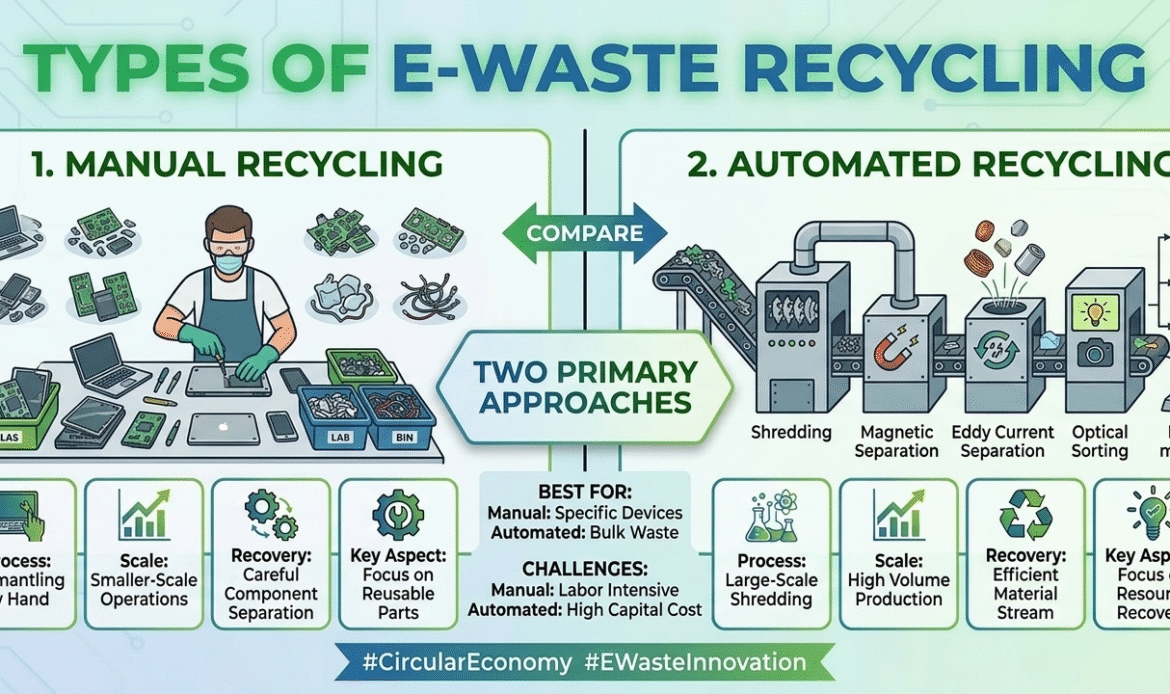
E-waste recycling can be carried out through several different methods, each carefully designed to recover valuable materials while reducing environmental harm. The approaches assist in controlling the rising amount of electronic waste which is discarded while they protect the environment through safe handling of dangerous materials and conversion of recycled materials into productive use. The most common types of e-waste recycling include manual dismantling, mechanical recycling, chemical processing, and refurbishment and reuse, each serving a unique purpose in creating a sustainable and efficient recycling system.
1. Manual Dismantling
Technicians use their expertise to disassemble electronic devices through manual disassembly which enables them to extract separate components from the equipment. The technicians use this practical method to detect dangerous materials which they must treat as hazardous because these substances pose environmental contamination risks. Through manual dismantling technicians can process delicate components which machines would damage while they extract valuable metals and recyclable materials from the equipment. The recycling method provides exact process control which enables material recovery while decreasing the chance of toxic substance pollution.
2. Mechanical Recycling
Mechanical recycling uses specialized machines to shred electronic devices into smaller, manageable pieces, which are then carefully sorted into metals, plastics, glass, and other components. This method is highly efficient for processing large volumes of e-waste quickly, making it ideal for commercial recycling facilities. Mechanical recycling allows useful material to be recovered through its combination with manual dismantling and chemical processing. The method enables efficient component separation which leads to waste reduction and effective reusable parts recovery while decreasing the environmental harm caused by electronic waste.
3. Chemical Processing
Chemical processing uses chemical treatments to extract precious metals from circuit boards because they contain gold, silver and palladium. The method provides highly effective material recovery capabilities despite its advanced technical design because it enables extraction of materials which manual and mechanical methods cannot separate. The system enables companies to recover maximum valuable assets while producing minimum operational waste.
4. Refurbishment and Reuse
Refurbishment and reuse focus on giving electronic devices a second life instead of discarding them. The organization properly restores and tests working devices which it then distributes to people and educational institutions and community organizations. The method results in two major environmental benefits because it decreases all electronic waste production and stops dangerous substances from contaminating landfills and the ecosystem. Refurbishment enables people who lack financial resources to access technology through its cost-effective distribution of refurbished equipment. This approach demonstrates how recycling e-waste creates environmental advantages through extended electronic life and sustainable resource management and social progress.
Key Advantages of Recycling E Waste
TThe benefits of e-waste recycling extend their effects to three different areas which include environmental protection and economic development and social progress. The recycling process of used electronics enables the protection of essential natural resources which include gold and copper and aluminum while it decreases the energy requirements of resource extraction through mining. The process protects ecosystems and human health because it stops dangerous substances from entering soil and water and air. The process of e-waste recycling provides environmental advantages and it creates economic benefits by generating employment opportunities in collection and refurbishment and material recovery operations.
Protecting the Environment
The most significant benefit of recycling electronic waste stems from its capacity to safeguard environmental ecosystems. The improper disposal of electronic devices results in their toxic substances which will inflict serious damage upon the natural world. People who understand the benefits of electronic waste recycling will discover that proper recycling practices stop dangerous substances from entering ground soil and water bodies and atmospheric air. The recycling process of electronic waste materials allows for safe handling of dangerous components while recovering valuable materials instead of letting electronics deteriorate in landfills.
Proper recycling facilities handle electronic waste by separating dangerous materials from the waste stream which undergoes detailed management processes. The process prevents landfill waste which leads to pollution while it stops soil degradation and protects water systems from hazardous material spills. The process of recycling electronic waste provides an essential benefit to the environment by decreasing air pollution which results from the combustion or improper handling of electronic waste. The planet receives multiple protective benefits from e waste recycling because it prevents dangerous chemicals from moving into natural ecosystems while establishing a cleaner environment that future generations will inherit.
Conserving Natural Resources
Electronic devices contain valuable materials like gold, silver, copper, and aluminum, which require extensive mining and energy to extract, often damaging natural habitats in the process. Understanding the advantages of recycling e waste highlights how recycling can recover these precious materials and put them back into new products. The advantages of recycling e waste not only conserve finite resources but also reduce the environmental impact associated with mining and manufacturing. By embracing the advantages of recycling e waste, we turn old electronics into a sustainable source of raw materials, protecting both the planet and future generations.
Valuable Materials Found in E-Waste
| Material | Common Use in Electronics | Benefit of Recycling |
|---|---|---|
| Gold | Circuit boards | Reduces mining demand |
| Copper | Wiring and cables | Saves energy |
| Aluminum | Device casings | Reusable metal |
| Silver | Electrical contacts | Conserves rare metals |
| Plastic | Outer components | Reduces plastic waste |
Reducing Landfill Waste
The current state of global landfills has reached its limit because the increasing amount of electronic waste creates additional problems. The process of recycling e waste provides essential benefits to our society. The process of recycling e waste provides benefits because it reduces the quantity of e waste which would otherwise accumulate in landfills. When people learn about the benefits which e waste recycling provides to society, they realize that recycling electronic devices has become essential for solving the increasing issue of electronic waste.
Recycling electronic devices enables the safe containment of dangerous substances while recovering reusable materials from these devices. The main benefit of e waste recycling lies in its ability to protect valuable landfill space while stopping environmental damage from occurring. It improves waste handling operations and supports public health by maintaining cleaner environments. The planet benefits from e waste recycling because it provides various advantages which function as a relief mechanism, which helps to decrease landfill waste and minimize environmental destruction.
Saving Energy Through Recycling
The creation of electronic devices from basic materials needs extensive energy usage. The process of mining metals and moving resources and transforming them into finished products requires considerable energy expenditures. The benefits of recycling electronic waste begin to show themselves at this point. The process of recycling electronic waste provides advantages because it enables material recovery from outdated electronics which decreases the requirement for energy-intensive mining and manufacturing activities. When people recognize the advantages of recycling e waste, they understand that recycling electronics is not only about managing waste but also about conserving valuable energy resources.
The process of recycling aluminum leads to energy savings which reach 95% when compared to the energy needed for producing new aluminum from raw ore. The same energy savings apply to other metals which people frequently find in electronic devices. The main benefit of recycling electronic waste enables industries to process their existing materials instead of acquiring fresh resources through mining activities. The benefits of recycling electronic waste lead to worldwide energy savings which also help decrease greenhouse gas emissions and protect the environment.
Creating New Job Opportunities
Another major advantage of recycling e-waste is the economic impact it generates through job creation. The advantages of recycling e waste extend beyond environmental benefits by opening up employment opportunities in multiple sectors. As more electronics are recycled, the demand for skilled workers grows, providing stable jobs while supporting local communities. Understanding the advantages of recycling e waste shows that responsible recycling not only helps the planet but also stimulates economic growth by creating careers in an expanding and essential industry.
- Jobs are created in several areas:
- Collection and transportation
- Recycling facility operations
- Electronics repair services
- Refurbishment centers
- Material recovery plants
Encouraging a Circular Economy
The conventional economic model operates through a straightforward cycle which begins with resource extraction and proceeds to product creation before ending with product disposal after its useful life. The process begins with the extraction of natural resources which leads to the production of goods that ultimately become waste materials. The process of recycling electronic waste brings significant benefits to society at this particular moment. Industries and consumers who understand the benefits of e-waste recycling will stop creating wasteful materials and start using resources in an eco-friendly manner.
The recycling of electronic devices enables a circular economy which focuses on material reuse instead of waste disposal. The primary benefit of e-waste recycling enables the retrieval of precious materials from outdated electronics which then reenter the manufacturing process rather than contributing to environmental contamination. The circular system enables products to maintain their value for extended periods while materials enter a cycle of reuse and waste transforms into usable materials. The process of recycling e-waste generates multiple advantages which enhance environmental sustainability while decreasing ecological damage. In simple terms, the
Preventing Health Hazards
The improper disposal of electronic devices creates serious environmental hazards, allowing toxic substances like lead, mercury, and cadmium to leak into soil, water, and air. These metals can cause long-term health problems, including respiratory issues and neurological damage. Understanding the advantages of recycling e waste helps people handle electronics responsibly, protecting both their health and the environment. Recycling provides communities with two major benefits: protecting the environment and preventing hazardous waste from spreading.
The recycling process ensures hazardous materials are safely managed, protecting workers and the general public from dangerous exposure. In many developing countries, informal recycling methods pose significant risks by exposing people to toxic substances. Proper e-waste recycling facilities prevent hazardous materials from entering residential areas, water systems, and workplaces, creating safer environments and promoting better health for everyone.
Supporting Technological Sustainability
The fast pace of technological development brings forth new products each year which make existing products outdated. The constant upgrade cycle produces electronic waste because people discard their old devices without recycling them which puts extra strain on landfills and natural resources. The rapid turnover of e-waste requires managers to understand the recycling advantages which help them handle e-waste better. Recycling e-waste provides two main benefits because it helps us to manage old electronic devices and it enables us to recover important materials which we will need in upcoming projects.
Recycling supports sustainable technology by enabling materials from older devices to be reused in new innovations. The primary benefit of e-waste recycling enables people to extend the lifespan of their electronic devices because it transforms potential waste into usable materials. Recycling e-waste provides environmental benefits because it helps companies to use existing technology resources while creating less waste which benefits the environment.
Reducing Carbon Footprint
Electronic manufacturing is a major contributor to carbon emissions due to the energy required for mining raw materials and producing new devices. The advantages of recycling e waste become clear when we reuse materials from old electronics, reducing the need for energy-intensive production and lowering environmental pollution. Recycling allows businesses to operate more sustainably while conserving valuable resources. Every recycled device helps protect the climate by cutting carbon emissions, demonstrating that the advantages of recycling e waste go beyond waste management to actively reduce humanity’s overall environmental footprint.
Benefits include:
- Lower greenhouse gas emissions
- Reduced industrial pollution
- Decreased energy consumption
- Sustainable manufacturing processes
- Improved climate protection
Promoting Responsible Consumer Behavior
Our training extends until October of 2023. The advantages of recycling e waste help people develop greater awareness of their consumption habits and the environmental impact of their electronic products. By understanding the advantages of recycling e waste, individuals are encouraged to make smarter choices that protect the environment while managing daily electronic use. Consumers who embrace these practices not only reduce waste but also contribute to a cleaner and more sustainable planet.
People who recognize the advantages of recycling e waste often repair devices instead of discarding them, creating positive behavioral changes. These benefits foster environmentally responsible habits, reduce pollution, and help build a healthier world. Understanding the advantages of recycling e waste empowers individuals to take actionable steps toward protecting natural resources while using technology responsibly
E Waste Recycling Opportunities
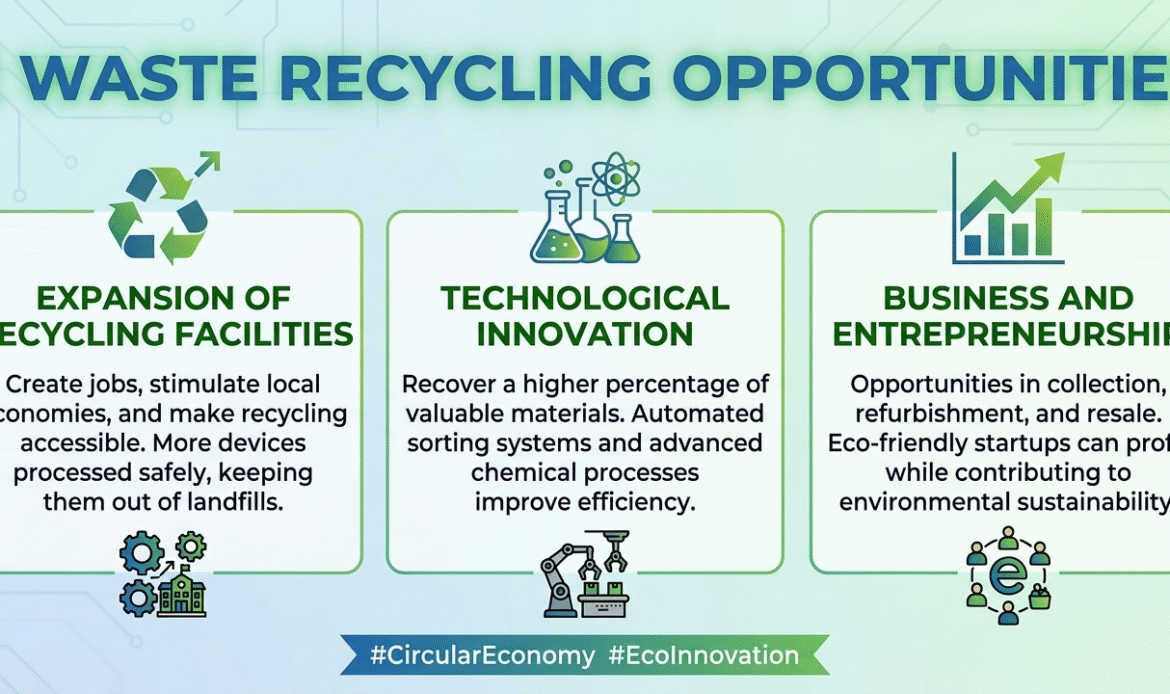
- Expansion of Recycling Facilities – With the growing amount of electronic waste produced globally, there is a significant opportunity to establish more recycling facilities. These centers not only manage e-waste responsibly but also create jobs, stimulate local economies, and make recycling more accessible for communities. Expanding facilities ensures that more electronic devices are processed safely rather than ending up in landfills.
- Technological Innovation in Recycling – Advances in recycling technology offer opportunities to recover a higher percentage of valuable materials from old electronics. New techniques, such as automated sorting systems and advanced chemical processing, improve efficiency and reduce environmental impact. These innovations make e-waste recycling more effective, ensuring that precious metals and components are reused in new products.
- Business and Entrepreneurship Opportunities – The e-waste recycling industry presents opportunities for entrepreneurs to develop businesses in collection, refurbishment, repair, and resale of electronics. Startups can also explore eco-friendly product design or offer certified recycling services. By tapping into these opportunities, businesses can profit while contributing to environmental sustainability.
- Community and Educational Programs – Governments, NGOs, and companies can create programs to educate the public about responsible e-waste disposal. Awareness campaigns and community recycling drives encourage people to recycle their old electronics. These initiatives not only increase recycling rates but also promote environmental consciousness and responsible consumer behavior.
- International Collaboration and Policy Development – There are opportunities for countries to collaborate on e-waste management through global policies, agreements, and trade of recyclable materials. By aligning regulations and sharing best practices, nations can create more efficient recycling systems and reduce illegal dumping. This collaborative approach maximizes the benefits of e-waste recycling worldwide.
- Sustainable Product Lifecycle Management – E-waste recycling opens opportunities for manufacturers to design products with sustainability in mind. Companies can create electronics that are easier to disassemble, repair, and recycle. This approach supports a circular economy, reduces environmental impact, and reinforces the importance of responsible production and consumption practices.
How E-Waste Recycling Benefits the Environment and the Planet
The advantages of recycling e waste have a profoundly positive impact on the environment and the planet. By properly managing old electronics, the advantages of recycling e waste prevent toxic substances like lead, mercury, and cadmium from contaminating soil and water, protecting ecosystems, wildlife, and human health. The advantages of recycling e waste also include conserving valuable natural resources such as gold, silver, copper, and aluminum, reducing the need for energy-intensive mining that damages habitats. Furthermore, the advantages of recycling e waste lower greenhouse gas emissions by cutting down the energy required to manufacture electronics from raw materials.
- Prevents soil and water pollution from toxic materials
- Conserves valuable metals and reduces mining impacts
- Lowers carbon emissions and energy consumption
- Reduces landfill waste and environmental stress
- Supports biodiversity and healthy ecosystems
The Role of Governments and Businesses
Governments and companies play a crucial role in managing electronic waste effectively. Many countries have introduced dedicated recycling programs and regulations to ensure e-waste is handled responsibly. Understanding the advantages of recycling e waste helps policymakers and organizations create systems that protect the environment while promoting resource recovery. The advantages of recycling e waste extend beyond individual action, showing how structured initiatives can make a big impact on sustainability.
Businesses are also adopting eco-friendly practices by designing electronics that are easier to repair, recycle, and upgrade. These efforts amplify the advantages of recycling e waste by making it simpler for consumers to participate in recycling programs. When companies and governments work together, the advantages of recycling e waste become more accessible and effective, creating a system where old electronics are responsibly managed and valuable materials are reused rather than wasted.
How Individuals Can Recycle E-Waste
You don’t need to be an environmental activist to make a real difference. Understanding the advantages of recycling e waste shows that even small, everyday actions can have a big impact. The advantages of recycling e waste encourage individuals to take responsibility for their old electronics, helping reduce pollution and conserve valuable resources. By taking simple steps, anyone can contribute to a cleaner and more sustainable environment.
Practical ways to participate include using certified e-waste recycling centers, donating working electronics, joining local recycling drives, selling old devices for refurbishment, and avoiding illegal dumping. Each of these actions highlights the advantages of recycling e waste, turning discarded gadgets into valuable materials instead of harmful waste. Every device properly recycled is one less item polluting the planet, reinforcing the positive impact of understanding the advantages of recycling e waste in everyday life.
Conclusion
The advantages of recycling e waste go far beyond simply reducing trash—they protect the environment, conserve valuable resources, save energy, create jobs, and support a sustainable economy while minimizing health risks and pollution. In today’s technology-driven world, electronic waste is unavoidable, but how we manage it makes all the difference. By embracing the advantages of recycling e waste and recycling electronics responsibly, we transform discarded gadgets into valuable resources, contributing to a cleaner, safer, and more sustainable future. The next time you replace a phone, laptop, or any electronic device, remember the advantages of recycling e waste and ask yourself: will this device become pollution, or will it become opportunity?
Explore another insightful article to deepen your understanding on E Waste or E Waste Recycling Machine.
Frequently Asked Questions
What is e-waste recycling?
E-waste recycling is the process of collecting and processing old or discarded electronic devices so their materials can be reused. This includes recovering valuable metals like gold, copper, and aluminum while safely disposing of hazardous components.
Why is recycling e-waste important?
Recycling e-waste is important because electronic devices contain toxic materials that can harm the environment if dumped in landfills. Proper recycling prevents pollution, conserves natural resources, and reduces the need for mining new raw materials.
What electronic items can be recycled as e-waste?
Many electronic items can be recycled, including smartphones, laptops, desktop computers, televisions, printers, tablets, cables, and household appliances. Most certified recycling centers accept a wide range of electronic devices.
How can individuals recycle their electronic waste safely?
Individuals can recycle e-waste by taking old electronics to certified recycling centers, participating in local e-waste collection drives, donating working devices, or using manufacturer take-back programs designed for responsible disposal.