


The digital revolution has gifted us a pile-up of useless tech or what we refer to as “junk.” While some people think of this as simply junk that has been thrown away, entrepreneurs who are more innovative than others see this pile-up of broken electronic waste as a true gold mine! If you want to take advantage of this gold mine, you’re not going to be using a shovel; instead, you will require an industrial-grade e waste recycling machine. Using recycling machines to recycle e waste is not only for the earth; it will also be a very high-profit margin business in the area of urban mining.
This guide will provide you with all the details you’ll need to learn how to make money from e waste recycling. We will cover how these machines work, the importance of e waste recycling machine in the modern circular economy, and how to turn e-waste into a high-value business opportunity.
Table of Contents
What Exactly is an E Waste Recycling Machine?
Think of electronic waste (e-waste) recycling systems as a high-tech digestive system for discarded electronics. You feed the system a complex and messy “meal” of things like old motherboards, tangled copper wires, and smashed monitors. The system then breaks each “meal” down into its base “nutrients,” which are pure copper, aluminum, gold, and high-quality plastics. These are the mechanical centerpieces of urban mining, turning forgotten electronic technologies into a steady revenue stream.
The Multi-Stage Processing Line
Each e waste recycling machine is not just one machine; rather, it is usually a complex, multi-part production line that has been engineered to shred, separate, and refine materials into a highly accurate finished product. The process starts with heavy-duty shredders that shred large items into small pieces, which are then fed onto conveyor lines progressing through the electrostatic separator and magnetic sorter (the two main types of sorting systems) to the next stage of processing. After sorting, each piece is coded as to its physical properties by the sorters, using a combination of air density and magnetic field.
Efficiency Through Physics
Dismantlement of modern electronic devices via hand tools is a long, drawn-out process that involves extreme risk of injury resulting from injury caused by jagged edges, heavy metals and harmful dust particles to both yourself and others. They utilize several basic laws of physics, i.e. gravitational forces, magnetic forces and the utilization of electrical energy at high voltages to perform most of the work for us. By automating the e waste recycling process machines ensure the near total recovery of useful materials from e waste in a secure manner.
Safe Handling of Hazardous Components
Not only do e waste recycling machine provide a means for recovery of useful components from e waste but they are also designed to contain hazardous materials in electronic products. Electronic products are likely to contain lead, mercury or cadmium which may pose a threat to the environment if they become airborne. Modern recycling facilities utilize highly efficient collection systems and filtration systems specifically designed to capture these hazardous particles and protect both workers and the local environment.
The Anatomy of a Modern Recycling Plant
If you walked into a professional facility, you wouldn’t just see a giant blender. You’d see a synchronized dance of different mechanical components working in harmony.
- The Primary Shredder: This is the “teeth” of the operation, grinding large items like printers and towers into manageable chunks.
- Magnetic Separators: These act like a giant claw, pulling out iron and steel instantly from the mix.
- Eddy Current Separators: These use clever magnetic pulses to literally “flick” non-ferrous metals like aluminum off the conveyor belt.
- Air Classifiers: These use high-pressure wind to blow away light plastics and dust, leaving the heavy, valuable metals behind.
- Electrostatic Separators: The “brain” of the operation that separates fine metal powders from plastic resins with incredible precision using high-voltage fields.
Why Urban Mining is Better Than Traditional Mining
Did you know there is more gold in a ton of iPhones than in a ton of raw gold ore? It sounds wild, but it’s a scientific fact that highlights why an e waste recycling machine is so essential. Traditional mining requires blasting massive holes in the earth, displacing entire ecosystems, and using harsh toxic chemicals like cyanide to leach microscopic flakes of metal from rock. Urban mining flips this script by simply reclaiming high-purity materials we have already extracted and refined, essentially turning our landfills into the most efficient mines on the planet.
It’s like finding a $20 bill in an old winter coat—except the coat is a discarded printer and the $20 bill is high-purity copper. In traditional mining, you move tons of earth for a few grams of metal, but an e waste recycling machine processes “concentrated” waste that is already in a metallic state. This process reduces the energy required for production by up to 90% compared to smelting raw ore. By utilizing these machines, we drastically reduce the demand for destructive virgin mining, protect the natural landscape from toxic tailings, and slash the global carbon footprint.
Key Features to Look for in a Recycling System
Not all equipment is built to handle the daily grind of industrial scrap. If you are looking to invest in an e waste recycling machine, you want to avoid a “lemon” that chokes every time a thick power cable or a heavy-duty motherboard hits the internal blades. Durability and precision are the two pillars of a successful operation; without them, your maintenance costs will quickly outpace your metal recovery revenue.
5 Critical Performance Metrics
- Throughput Rate: How many kilograms of scrap can the unit process every single hour?
- Separation Purity: Does it give you 99% pure copper, or is the metal still mixed with plastic?
- Energy Efficiency: Will the electricity bill eat all your potential profits at the end of the month?
- Dust Suppression: Does the system keep the air clean and breathable for your floor workers?
- Blade Durability: How many tons can the shredder handle before you need to replace the cutting teeth?
Comparing Different E Waste Recycling Machine Capacities
Before you pull the trigger on a purchase on e waste recycling machine, you need to match the machine to your “feedstock.” Are you a local startup or an industrial giant?
| Machine Type | Capacity (kg/h) | Primary Target | Footprint |
| Mini Wire Stripper | 50 – 100 | Copper Cables | Desktop or Small Garage |
| PCB Scrap Crusher | 200 – 500 | Computer Motherboards | Medium Warehouse Space |
| Integrated E Waste Line | 1000+ | All Mixed Electronics | Large Industrial Site |
| Precious Metal Unit | Batch based | Gold and Silver Recovery | Chemical Lab Setup |
The Secret Sauce: PCB Precious Metal Recovery
The Holy Grail of electronic waste, or ewaste, is the Printed Circuit Board, or PCB. PCBs, commonly referred to as green boards, are loaded with metals such as silver, gold, and palladium, making them highly valued amongst the scrap. At the same time, PCBs present a technical challenge to recycle the precious metals, as the metals are adhered to fiberglass, copper foil, and plastic resin. If an appropriate method is not available to remove the metals, all of the materials will remain trapped inside a worthless composite material.
To extract the value from PCBs, a specialized e waste recycling machine is used that employs a sophisticated multiple-step process. First, the e waste recycling machine removes capacitors, resistors, and high-value chips from the PCB by controlled heating or mechanical means. Next, the machine uses a heavy-duty crusher to shred the remaining boards into very fine, a uniform powder. Finally, the system uses a high-voltage electrostatic charge to separate all the metal from the non-conductive “fluff” created. This process is essentially using some sort of alchemical process mechanically to extract gold from what was once seen as trash.
Is This Business Actually Profitable?
Let’s be real: you aren’t doing this just to be a hero for the environment; you’re doing it for the bottom line. The profitability of an e waste recycling machine depends on two things: your “feedstock” (what you put in) and the current global market price of metals.
When copper prices spike, your machine becomes a literal money-printing press. Even the plastic residue, often called “epoxy resin powder,” can be sold to the construction industry for use as a filler material in bricks or pavement. In this business, nothing goes to waste.
Environmental Regulations You Can’t Ignore
Using a large piece of e waste recycling machine equipment for shredding in your backyard, where you will dump lead dust into your neighbouring areas is unacceptable. New machines designed specifically for e-waste recycling comply with strict international regulations, therefore allowing you to operate and profit while promoting the health of your neighbours. Working with your machines according to the laws established will be a prerequisite for creating a sustained business in an increasingly “green” economy subjected to both increasing regulation and scrutiny.
Air Quality and HEPA Filtration
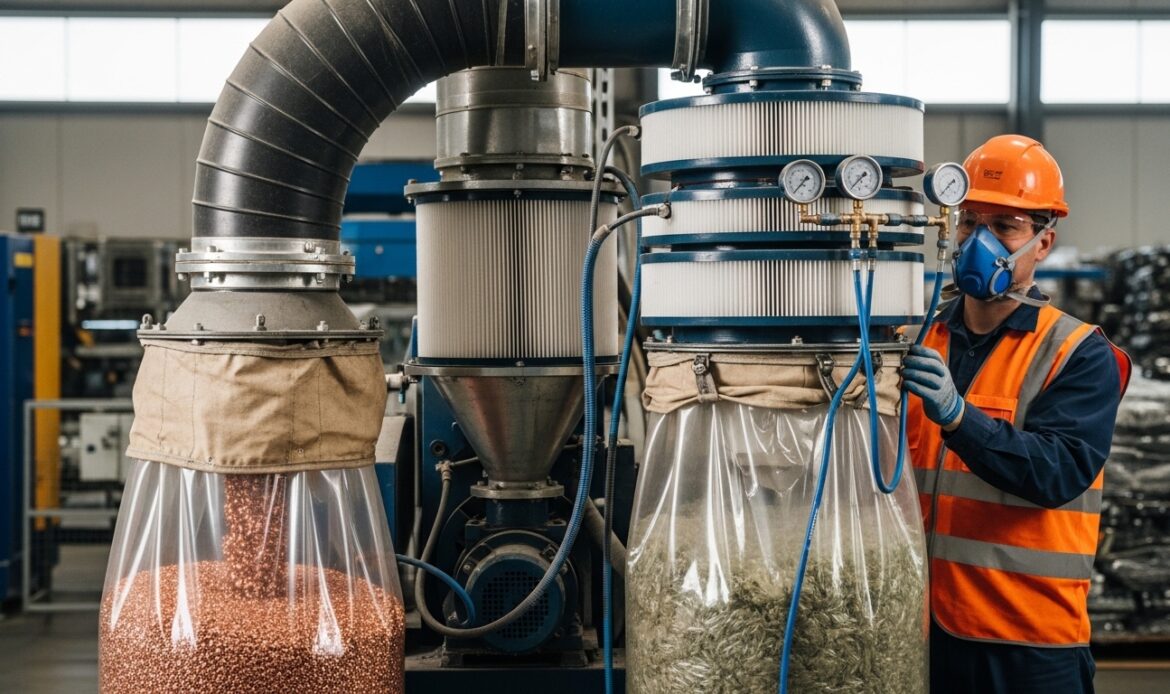
A HEPA filter is one of the components of a compliant recycling facility’s equipment. This filter is a critical part of the air quality control system by collecting tiny lead and mercury particles (both very toxic) before they can exit their system or reach your area. Without this containment, the heavy metal dust created during crushing will land in your surrounding soil and air and can create a respiratory hazard to your workers and the surrounding community.
Acoustic Insulation and Noise Mitigation
You cannot simply set up a large equipment based shredder in your own backyard blowing lead dust throughout the neighborhood (as e-waste recyclers had been doing) when newer e-waste recycling machines manufactured to meet international standards allow for a more environmentally friendly way to earn money while still not endangering the health of the surrounding community. While there are legal regulations you must follow regarding operation of your equipment, they will also aid in establishing your company as a long term viable competitor in this ever-growing green economy that is becoming more tightly regulated.
Thermal Control and Fire Prevention
HEPA filtration systems are designed to ensure compliance with environmental regulations related to air purity prior to equipment operation and includes a series of specialized filters that use the principles of air pressure, centrifugal force, and gravity in order to filter out the very fine, toxic lead and mercury particles that would otherwise be expelled from your equipment through the exhaust once you began using your equipment for grinding up e-waste. The lack of this type of containment means that the heavy metal dust created during the shredding process would land on the surrounding dirt and eventually be inhaled by workers or individuals living nearby which could pose serious threats to the respiratory health of both workers and residents alike.
Emergency Response and Operator Safety
All emergency stop systems in your facility must be kept up to date and equipped with the latest technology for quickly stopping the operation of machines. Fast-acting, automatic “kill” devices are required to shut down the machine in an emergency, and these must be located in strategic locations along the entire length of the production line so that they are accessible to the operator at all process stages. In the event of a mechanical jam or safety breach, the operator can immediately disable the power supply to the entire system to prevent catastrophic equipment failure and injury to the operator.
Soil and Groundwater Protection
A “closed-loop” processing system is necessary to keep liquids, solids and dust free from heavy metals and chemical residues from contaminating the regional groundwater supply. By maintaining a sealed system that prevents leaks from occurring, you can protect the environment from contamination by your operation. Furthermore, it will ensure that the final recovered product is free from contamination, ready for high-value resale, and will help you comply with state and federal environmental regulations.
Common Challenges in E Waste Processing
Processing e-waste is a tough operation for machinery and requires a lot of vigilance along with sound engineering design to prevent failures and excessive down time. E-waste is composed of an abrasive, varied, often hazardous material, making the operator a part production manager, part safety technician.
The Danger of Lithium Ion Batteries
Batteries represent the “time bomb” in e-waste recycling. If a lithium ion battery is hidden inside another device and comes into contact with high-speed shredders, it has the potential of creating a “thermal runaway” when subjected to this type of mechanical impact. If this occurs, the result is a chemical-based fire that is very difficult to put out. As a result, current e waste recycling machine are equipped with advanced thermal sensing equipment and automated fire suppression systems that can put out a flare within a fraction of a second before it develops into an uncontrollable problem.
The Headache of Product Diversity
Not only will you have to contend with the many different types of gadgets entering your recycling stream (e.g., bulky 90 ’s VHS/DVD players), but also the variety of products will challenge your recycling program from one day to the next (e.g. Handheld tablet computers manufactured with materials bonded together with industrial adhesives) creating a greater difficulty in separating those gadgets than if they were all designed for the same purpose.
Wear, Tear, and Material Abrasiveness
Lastly, there’s the mechanical wear and tear on your E Waste Recycling Machine or e waste; very hard glass, like from computer monitors, combined with fiberglass resins used in circuit boards, are extremely abrasive materials; therefore, they are like sandpaper to the internal parts of e waste recycling machinery . The wear and tear will result in loss of precision due to increasing frictions on parts of your separating machines if you do not have high- grade alloys and regularly sharpen all blades . If this happens, it has the potential to decrease the quality of your end product significantly and reduce their resale value.
The Logistics of E-Waste: Collection and Transport
While having an efficient e waste recycling machine is great, without a robust logistics program to haul heavy and oversized e waste to your facility’s processing facility (which includes your processing machines), you may result in expensive operations due to excessive truck costs or truck routes that are inefficient because e waste is extremely heavy and awkward to haul.
Optimizing Collection Routes
To optimize the capacity of your recycling and processing machines, you can establish a streamlined collection network by using a “hub and spoke collection model”. By consolidating your collection in discreet geographic areas instead of making multiple individual pickups, customers have access to designated drop off points for their old and unwanted electronics. You can maximize the fuel usage for your collection vehicles by only dispatching your vehicles when the collection hub is 100% full; therefore optimizing the number of collections and diesel fuel used per round trip.
Safe Handling and Hazardous Transport
Safely Handling and Transporting Hazardous Material Since the hazard of older electronics contains lead acid batteries or fragile mercury containing back lit screens, your transport personnel need to know how to handle hazardous materials (HAZMAT). The cleanup of a single broken CRT monitor or a leaking battery at the back of the truck could cost thousands of dollars in remediation and fines. Using specially designed, puncture-proof bins and secure tie-downs will provide stability for your feedstock arriving at the e-waste recycling machine for safe processing.
Reverse Logistics Partnerships
The best recyclers partner with electronics retailers for reverse logistics programs. For example, when a customer buys a new television or refrigerator, the retailer often removes the old one. By serving as the downstream processor for these retailers you can take advantage of their existing large transportation network. This allows you to invest your capital in upgrading your equipment instead of maintaining a huge fleet of trucks.
How to Choose the Right Manufacturer
When purchasing an e waste recycling machine, you will want a provider that has more to offer than a beautiful site and low pricing, much like when getting married for a long time. The success of your operation will really depend on how reliable they are at providing reliable service after the sale.
Five Questions to Ask Your Supplier
Before signing any contracts you must make sure that the manufacturer provides on location installation as well as comprehensive training of your local staff. You’ll want to know what the average lead time is for replacement blades and wearable parts to keep your production line from being down due to waiting for a specialized technician to come to your site. You should also inquire whether the E Waste Recycling Machine can be modulated and upgraded as your company grows or if it’s a ‘closed’ system that will have to be completely replaced in the future. You will also want to check and see if they provide a full warranty covering the motor and PLC to protect your capital investment. Finally, remember to request if you can send them a 50kg sample of your specific material for a documented test run to verify the separation purity of your final purchase.
The Future: AI and Robotics in Recycling
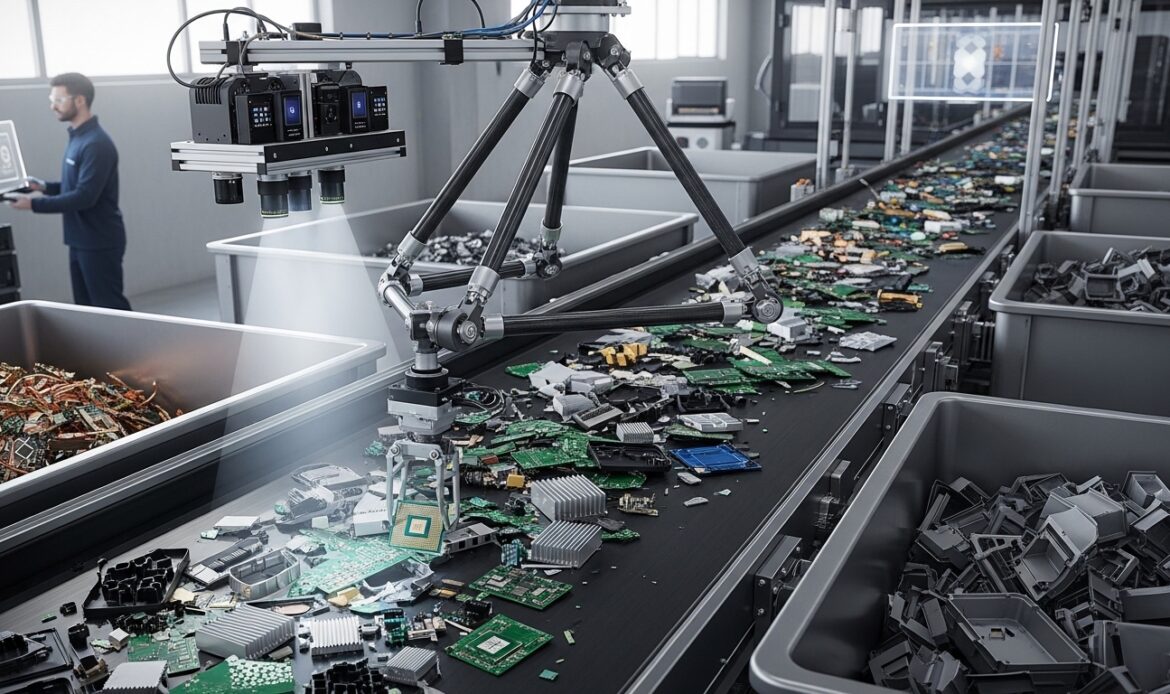
We are entering a new stage of “intelligent recycling” where the raw energy of traditional shredding will be replaced with the finesse of digital intelligence. The new generation of e waste recycling machine is now more than just a combination of gears and belts; it has evolved into an intelligent ecosystem. By using AI-enabled cameras and advanced sensors, these E Waste Recycling Machine can identify different plastics, flame retardants and particular electronic components in real time as they travel at high speeds down a conveyor belt.
Precision Harvesting with Robotic Arms
With the assistance of high speed robotic arms acting as specialized “surgeons” of the scrap yard, modern facilities will be able to precisely harvest the high-value components from each device before it is sent to the rugged shredder to recover the remaining value of the device. Because harvested components are often worth more than shredded granules, the total market value of the yield will be much higher than if this method were not employed.
Data-Driven Efficiency and Longevity
Automation is not only about picking out and separating “good stuff”, but also about ensuring that the core of a company’s operation is protected. With the integration of AI, the removal of solid steel blocks or heavy batteries from e-waste before they reaches the blades on a primary e-waste recycling machine, creates a major reduction in the catastrophic wear and tear that is placed on the e-waste recycling machine. “The Matrix” is not just for pick-up and deliveries anymore! This level of autonomous sorting is currently being done by the best facilities in the world and allows their operators to run 24/7 with little to no human assistance and maximum material purity.
The Role of Deep Learning in Sorting
Deep Learning is set to be the catalyst for e waste recycling “evolution”. With the continued processing of consumer products in the e waste recycling machine, the machine continues to “learn” how to identify different types of electronic devices and their associated materials. Therefore, each day that an e waste recycling machine runs, it becomes more efficient and better able to keep pace with the constantly changing consumer electronics marketplace, all the while not requiring a complete hardware overhaul to do so. This adaptability also means that the e-waste recycling machine used today will continue to be an investment for the future as more and more manufacturers use new and exotic materials in their current products.
Steps to Launch Your Own Recycling Center
Are you ready to go big? You can’t just purchase a machine and crank it up thinking you will succeed. You actually need to have a plan that includes a consistent source of materials as your foundation. Before you shop for an e waste recycling machine, concentrate on obtaining your supply chain through networking with local businesses, schools and government facilities that have lots of old, worthless hardware to do something with. Once you can establish a continuous flow of used equipment, only then will you be able to deploy your processing equipment in order to maximize production and eliminate downtime. Don’t forget that even though the machine is the high performance engine in this industry, it is the scrap that fuels the revenue stream with all its high octane.
The Digital Gold Mine: Data Security and Destruction
Before a single circuit board touches the blades of an e waste recycling machine, there is a critical step that can make or break your reputation: data destruction. In an era of strict privacy laws, businesses aren’t just giving you their old computers; they are handing over years of sensitive financial records, client lists, and proprietary secrets. Providing a “chain of custody” that guarantees this data is physically destroyed is often more valuable to a corporate client than the recycling process itself.
The Role of Industrial Hard Drive Shredders
While a standard e waste recycling machine can handle motherboards and wires, high-security clients often require a specialized primary shredder specifically for hard drives and solid-state drives (SSDs). These machines are engineered to grind storage media into tiny, 20mm fragments, ensuring that no forensic data recovery is ever possible. By integrating a dedicated “data kill zone” into your facility, you can charge a premium for “certified destruction services,” adding a high-margin revenue stream to your metal recovery business.
Compliance and Certification
For facilities to secure contracts with financial institutions, medical facilities, and governmental organizations, they are frequently required to adhere to global data safety standards. This typically entails providing, at a minimum, continuous video surveillance of the shredding area and issuing “Certificates of Destruction” that correlate with the serial numbers of the devices that were shredded. If your e-waste recycling machine is accompanied with a robust security policy, not only are you no longer solely viewed as a scrap provider, you also become an accepted and trusted partner in the security of the devices being recycled.
Conclusion
Ultimately, an e waste recycling machine represents more than just another high-tech piece of manufacturing equipment. It serves as a critical connection point between our consumption-driven past and tomorrow’s environmentally responsible, circular economy. By processing obsolete electronics into high-purity raw materials, we are closing the manufacturing loop while protecting the environment from the negative effects of conventional mining — and achieving a healthy profit along the way. This business demonstrates that we can create both economic growth and environmental stewardship.
The 21st century’s “gold” lies in our junk drawers and back offices, whether you are a budding entrepreneur launching from a community-based warehouse or an established industrialist who wants to grow into a global recycling power. With the appropriate machine to extract it and convert the result to tradeable value, you will be successful.
Explore another insightful article to deepen your understanding on E Waste or E Waste Recycling Machine.
Frequently Asked Questions
What is the average recovery rate of an e waste recycling machine?
Most industrial-grade machines boast a separation recovery rate of 98% to 99% for metals like copper and aluminum. This high efficiency is achieved through a multi-stage process involving shredding, air gravity separation, and high-voltage electrostatic fields. By minimizing the amount of metal left in the plastic residue, these machines maximize the market value of your recycled output.
Can one machine process all types of electronic waste?
While integrated lines are versatile, a single e waste recycling machine is often optimized for specific feedstocks like circuit boards or copper cables. To process a “universal” mix, you typically need a modular system that includes primary shredders, magnetic separators, and specialized PCB crushers. Choosing a modular setup allows you to scale your operations as you encounter different types of electronic scrap.
How do these e waste recycling machine handle hazardous materials like lead or mercury?
Modern e waste recycling machine is designed with closed-loop systems and advanced dust collection units to prevent toxic leaks. Pulse dust catchers and HEPA filters are standard features that trap hazardous particles before they can enter the facility’s air supply. This ensures that the urban mining process remains environmentally friendly and compliant with strict health and safety regulations.
What is the typical lifespan and maintenance schedule for this e waste recycling machine?
A high-quality e waste recycling machine can last well over a decade if the heavy-duty motors and PLC systems are maintained properly. The most frequent maintenance involves sharpening or replacing the shredder blades, which usually happens every 500 to 1,000 tons of processed material. Consistent lubrication of the conveyor systems and cleaning of the electrostatic rollers will keep the machine running at peak performance.